Notebook Kid Book KDP PNG Canva Mockup: A Strategic Asset for Self-Publishers and Creators
If you have spent any time building a self-publishing business on Amazon KDP or creating custom stationery products, you already know that formatting and design often consume more time than the creative work itself. The Notebook Kid Book KDP PNG Canva Mockup is a digital resource designed to remove that friction. This package includes high-resolution PNG mockups and editable Canva templates tailored for children's notebooks, journals, activity books, planners, and creative writing journals. The idea is straightforward: you get a ready-made structure that you can drop your own content into, adjust the text, and prepare for upload. No need to build layouts from scratch or worry about sizing and resolution.
What makes this particular set worth considering is not just the convenience, but how it fits into a broader publishing or product creation workflow. When used intentionally, the Notebook Kid Book KDP PNG Canva Mockup becomes more than a time-saver. It becomes a tool for consistency, experimentation, and faster market testing. Whether you are a seasoned publisher or someone just starting out, understanding what this resource offers—and how to use it thoughtfully—can help you make better decisions about your product line and creative process.
What This Digital Collection Actually Includes
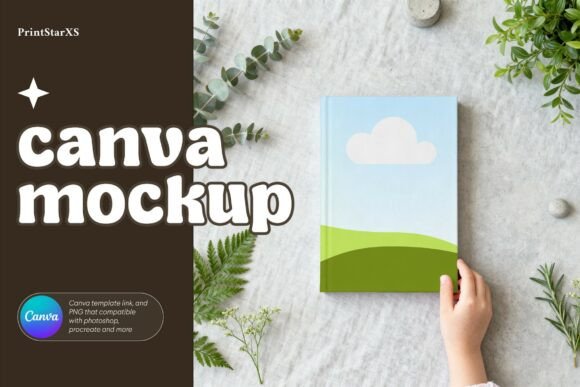
Before discussing strategy, it helps to clarify what you receive. The download contains one high-resolution PNG mockup with a transparent background, meaning you can place your own background or pattern underneath it. You also get a TXT file with a link to an editable Canva template that supports drag-and-drop editing. All files are 2048 x 2048 pixels, which is a standard size for KDP interiors, mockups, and social media previews. This is a purely digital product—no physical items are shipped.
The real value lies in the Canva template. Because it is fully editable, you can modify fonts, colors, layout elements, and text without needing any graphic design software beyond a web browser. For self-publishers, this means you can produce multiple variations of a journal or notebook by simply duplicating the template and swapping out cover art, prompts, or interior page styles. For designers, it provides a consistent base from which you can iterate new products quickly.
Why Thoughtful Use of This Mockup Can Support Your Goals
Many creators treat mockups and interior templates as afterthoughts—something to grab quickly when a product is already finished. That approach works, but it leaves value on the table. Used strategically, the Notebook Kid Book KDP PNG Canva Mockup can support several business and creative objectives simultaneously.
Faster Product Launch Cycles
Time-to-market matters, especially in categories like children's notebooks and activity books where trends shift and customer preferences evolve. Having a set of pre-built, editable templates means you can go from idea to listing in days rather than weeks. Instead of spending hours aligning margins, setting up page sizes, and testing fonts, you focus on content: the prompts, activities, illustrations, or journaling questions that make your product unique. The formatting is already handled, and the mockup gives you a professional preview for your listing images.
Consistent Brand Presentation
If you plan to build a series of notebooks or journals—say, a line of creativity journals for different age groups—consistency across products is crucial for brand recognition. Using the same template structure for each title ensures that page layouts, font hierarchy, and spacing remain uniform. Your customers come to expect a certain quality and reading experience, which encourages repeat purchases. The Notebook Kid Book KDP PNG Canva Mockup acts as a baseline that you can customize just enough to differentiate each product without reinventing the format every time.
Low-Risk Testing of New Ideas
Not every product concept will succeed. Some topics resonate, others fall flat. With a fully editable template, you can experiment with different themes, prompts, and interior styles at minimal cost. Create a version for a dinosaur-themed activity book, then a version for a space exploration journal, then a version focused on gratitude prompts. Upload a few variations to KDP and observe which ones gain traction. The ability to iterate quickly without heavy design investment is a strategic advantage, especially for independent publishers who cannot afford to commission custom layouts for every test.
When to Use This Resource for Best Results
Timing matters as much as the tool itself. Here are several scenarios where the Notebook Kid Book KDP PNG Canva Mockup delivers the most value.
- When you are launching a new children's product line. If you have a set of ideas for journals or activity books, starting with a consistent template allows you to produce multiple titles simultaneously and assess market response.
- When you need listing images quickly. The high-resolution PNG mockup gives you a clean, professional preview for your Amazon listing, social media posts, or email promotions. No need to photograph a physical copy.
- When you are collaborating with a content creator or illustrator. The template structure means your partner can see exactly where their content will go, reducing back-and-forth about layout and dimensions.
- When you are scaling your KDP catalog. As your library grows, efficiency in production becomes critical. A standardized template reduces decision fatigue and speeds up each new release.
Practical Approaches to Customization
Owning a template is one thing; using it well is another. Here are practical ways to approach the Notebook Kid Book KDP PNG Canva Mockup so that your final product feels intentional, not generic.
Start with the Content Brief
Before you open the Canva template, define what the notebook or journal will accomplish. Is it for free writing, structured prompts, drawing spaces, or educational activities? Knowing the purpose helps you decide which elements of the template to keep, which to modify, and which to remove. For example, a daily planner for children might need more structured sections, while a creative writing journal benefits from open space and illustration spots.
Adapt Fonts and Colors to the Audience
Children's products require legible, friendly typography. Avoid overly decorative fonts that hamper readability, especially for younger readers. Use the Canva template to test different font pairings: a clean sans-serif for headings and a simple serif or rounded font for body text. Color palettes should match the theme of the book but remain high-contrast for readability. The template allows you to experiment without commitment, so try a few variations before settling.
Use the Transparent PNG for Mockups and Marketing
The high-resolution PNG with a transparent background is not just for listing images. You can place your notebook mockup onto a variety of backgrounds—desk scenes, nature settings, or colorful patterns—to create lifestyle shots that show the product in use. These images perform well on social media and in Amazon A+ content. Keep a few background options saved so you can generate new marketing assets quickly whenever you launch a new title.
Plan for Variations Early
If you intend to create a series, build a system for naming and organizing your template versions. Save each variation with a clear file name that includes the theme, intended age group, and date. This habit prevents confusion when you have multiple products in development. The Canva template can be duplicated easily, so set up a master copy and branch off from there.
Considerations Before Relying on This Template
No template is a substitute for thoughtful content planning. The Notebook Kid Book KDP PNG Canva Mockup is a structural tool, not a creative strategy. Relying on it without a clear understanding of your target audience, your product goals, or your brand identity can lead to products that feel generic or mismatched.
One risk is over-customization without purpose. It is easy to tweak fonts, colors, and layout elements endlessly, chasing a sense of perfection that never arrives. Set a time limit for customization and stick to it. The template is meant to accelerate production, not to become a sandbox for indefinite tinkering. Another risk is using the mockup for products where the format does not suit the content. If you are creating a highly structured educational workbook, a general journal template may not provide the space or layout you need. Evaluate the template's page structure against your content requirements before committing.
Additionally, consider the competitive landscape. Many self-publishers have access to similar mockup sets. What will differentiate your product is the quality of your content, the specificity of your prompts, and the consistency of your branding. The template gives you a foundation, but the work you put into the interior content determines whether a customer chooses your notebook over another.
How to Approach This Asset Intentionally
Rather than treating the Notebook Kid Book KDP PNG Canva Mockup as a quick fix, see it as one component of a broader production system. Here is a mindset that has served experienced publishers well.
- Use the template for first drafts. Get your content into the template, adjust the layout, and then review with fresh eyes. The template allows you to see the product as a customer would, which often reveals gaps or opportunities you missed on paper.
- Maintain a template library. Over time, you may collect several mockup sets for different product types. Keep them organized by category—journals, activity books, planners—so you can quickly grab the right foundation for each new project.
- Invest time in the Canva template before your first product. Familiarize yourself with all editable elements. Know which layers can be moved, which fonts are loaded, and how the template handles text overflow. This upfront investment pays dividends across every product you produce from that template.
- Reuse and refine. After launching a product based on the template, note what worked and what did not. Adjust the template accordingly for the next release. Small improvements compound over a series of products.
Long-Term Value for Creators and Publishers
The Notebook Kid Book KDP PNG Canva Mockup is not a one-time asset. Its lasting value comes from how it integrates into your workflow over months and years. For creators who publish regularly, the ability to produce a polished product quickly means more time for content development, marketing, and customer engagement. It also means you can respond to market feedback faster—if a particular theme gains traction, you can produce a follow-up title while interest is still high.
For educators, small business owners, and freelancers who create custom stationery for clients, the template provides a professional base that can be adapted for different clients without starting from scratch. This saves billable hours and reduces the risk of formatting errors. For bloggers and content creators who sell digital products, the mockup offers a reliable way to present your work consistently across platforms.
The key is to remember that this tool is a means, not an end. The most successful self-publishers do not rely on templates to carry weak content. They use templates to amplify strong ideas and bring them to market efficiently. When you approach the Notebook Kid Book KDP PNG Canva Mockup with clear goals, a defined process, and an eye on your audience, it becomes a genuine strategic advantage—one that helps you build a catalog of products that reflects your creative vision and meets real customer needs.
Whether you are planning your first children's journal or expanding an existing line, the decision to use a structured template should come from a place of intentionality. Know what you want the product to achieve, understand the constraints of the format, and use the flexibility of Canva to make it your own. That is how you move from simply creating a notebook to building a sustainable publishing practice.