Cozy Farm Life Cute Comfy Coloring Book: Building a Better KDP Interior Without the Common Pitfalls
If you are searching for a Cozy Farm Life Cute Comfy Coloring Book to use as your next Amazon KDP interior, you have likely noticed there are many options out there. The challenge is not finding a file—it is finding one that actually works the way you expect. Many creators jump into the self-publishing space with enthusiasm, only to run into issues with resolution, formatting, or file compatibility that waste time and money. Let me walk through what this specific product offers, the mistakes I see people make most often, and how you can avoid them to create a professional, unique interior for your book.
What Makes This Coloring Book Interior Different
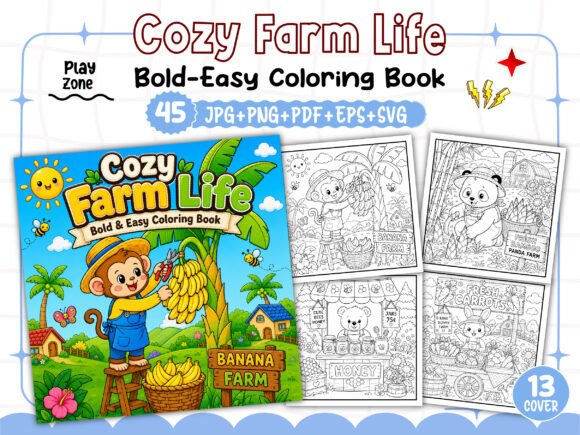
Before we talk about mistakes, it helps to understand exactly what you are getting. The Cozy Farm Life Cute Comfy Coloring Book interior download includes 45 black-and-white JPG, PNG, and SVG images at 300 DPI, plus an EPS file and a PDF that is print-ready. You also get 13 free PNG images for the book cover. The dimensions are 8.5” x 8.5”, which is a popular square format for adult coloring books on KDP. The images are high resolution, which matters far more than many first-time publishers realize. This is a complete interior kit that gives you flexibility across multiple file formats, so you can edit, resize, or combine images however you like.
The theme itself—cozy farm life with cute, comfy scenes—has a strong appeal for adults aged 20 to 50 who want stress relief, nostalgia, or a simple creative outlet. Barns, animals, gardens, and peaceful rural settings sell well when done right. But even with a good resource like this, the way you use it can make or break your book’s success.
Common Mistake #1: Ignoring the Resolution and Thinking Any Image Will Do
One of the most overlooked details in KDP coloring book creation is image resolution. I see people take a decent file and then scale it up in software without checking whether the original is 300 DPI at the final print size. If you try to stretch a 72 DPI image to fill an 8.5” x 8.5” page, you get blurry, pixelated lines that look unprofessional. Customers notice immediately, and returns or negative reviews follow.
What Happens When You Get This Wrong
Low resolution leads to jagged edges on farm animal outlines, fuzzy tree branches, and lines that bleed together when printed. For a coloring book, clean, crisp lines are essential. If the lines are not sharp, the coloring experience feels frustrating rather than relaxing. That frustration directly impacts your book’s rating and your ability to sell more copies.
How to Avoid This Problem
With a product like this one, you are already ahead because the files are delivered at 300 DPI. But you still need to use the correct file for your workflow. If you are inserting images into a layout tool like Canva or InDesign, always check that the import settings preserve the original resolution. Do not export at a lower quality just to reduce file size. Keep the PNG or SVG files for editing because they retain transparency and crispness. The JPG versions are fine for final placement, but make sure you are not compressing them unnecessarily.
A practical approach: import one image into your layout program, zoom to 100%, and look at the line edges. If they appear smooth and uninterrupted, you are good. If you see stair-stepping or fuzziness, go back to the original file and re-import without scaling.
Common Mistake #2: Using the Wrong File Format for Your Workflow
Another frequent error is picking one file format and sticking to it without considering how it affects your editing flexibility. The Cozy Farm Life Cute Comfy Coloring Book gives you JPG, PNG, SVG, EPS, and PDF options. That variety is there for a reason, but many people just grab the JPGs and move on, missing out on advantages.
Why It Matters
JPG files are great for quick placement but they do not support transparency. If you want to layer images, add backgrounds, or combine elements from different pages, PNG or SVG is far better. SVG files are vector-based, meaning they scale infinitely without losing quality. That is especially useful if you ever want to enlarge a single farm animal illustration for a cover element or a bonus page. EPS files are ideal if you work with professional design software like Adobe Illustrator. The PDF print-ready file saves you time if you just want to upload directly to KDP without any extra setup.
Better Approach
Start by opening the PDF to see the full interior layout as intended. Then, if you want to customize individual pages, use the PNG or SVG files. For example, you might want to swap the order of pages, remove a few images, or add your own title page. The SVG files let you edit colors, resize elements, or adjust line thickness if needed. Keep the EPS as a backup for high-end editing. By matching the format to your specific task, you avoid the frustration of discovering halfway through that your file type does not support a simple change.
Common Mistake #3: Overlooking the Cover and Interior Consistency
Many creators treat the cover and interior as separate projects, but they should feel like one cohesive product. The 13 free PNG images for the book cover are a huge advantage here. I have seen people buy a lovely farm-themed interior and then pair it with a generic cover that has nothing to do with the style or mood of the pages inside. That disconnect confuses potential buyers and hurts click-through rates.
What This Looks Like in Practice
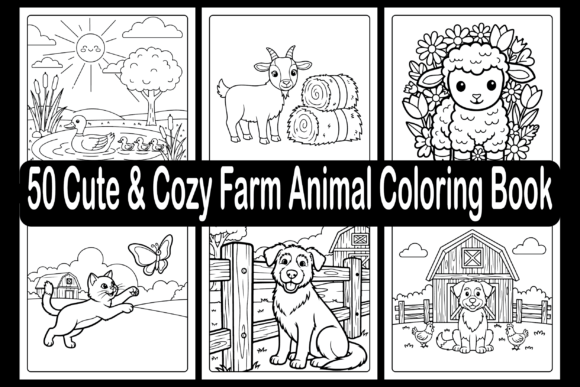
Imagine your interior has cute, hand-drawn style sheep, chickens, and flower gardens with soft, cozy lines. If your cover uses a photo-realistic barn or a completely different illustration style, customers sense something is off. They might not articulate it, but they hesitate to buy. On Amazon, that hesitation means scrolling past your listing to the next book.
How to Create Consistency
Use the provided PNG cover images that come with the interior. They are designed to match the same art style and mood. Choose one or two of the strongest farm scenes, arrange them on your cover, and add your title in a complementary font. Keep the color palette warm and inviting—soft browns, greens, and creams work well for cozy farm life. You can also extract a single SVG element, resize it, and place it on the cover for a unique look that still clearly belongs to the same book. This makes your listing feel polished and intentional, which signals quality to Amazon’s algorithm and to shoppers.
Common Mistake #4: Not Testing the Print-Ready PDF Before Uploading
A print-ready PDF file sounds straightforward, but small issues can cause big headaches at upload time. The PDF that comes with this interior is designed for KDP, but you should still run your own checks before hitting publish. I have seen people upload without checking margins, bleed areas, or page count requirements, only to get an error message or a proof that looks misaligned.
Typical Oversights
One common oversight is assuming the PDF will automatically adjust to your trim size. This interior is 8.5” x 8.5”, so if you try to upload it to a different size listing, you will get distortion or cropping. Another issue is missing bleed: if your PDF does not extend 0.125 inches beyond the trim edge, Amazon may reject it or print white borders. Also, check that all images are embedded and not linked to external files that will not transfer during upload.
Practical Checks You Should Run
Open the PDF in Adobe Acrobat or a similar viewer. Go to Print Production and check the page boxes. Make sure the trim box matches 8.5” x 8.5” and the bleed box extends appropriately. Scroll through each page to confirm that no images are misaligned or cut off. Print one page at home on standard paper as a visual test—this catches things like line thickness issues or unexpected contrast. If everything looks good, upload a draft to KDP and order a physical proof before publishing widely. That one proof copy can save you from a batch of poorly printed books.
Common Mistake #5: Skipping Interior Page Order and Flow Planning
It is easy to think any order of farm scenes works, but the reader’s experience matters. If you dump 45 images in random sequence, the book feels disjointed. Some scenes might be more detailed and take longer to color, while others are quick and simple. Without thoughtful arrangement, the coloring journey does not have a natural rhythm.
What a Better Flow Looks Like
Start with a few simpler images—maybe a single chicken or a flower pot—to ease the user in. Then progress to more complex scenes like a full barn with animals, trees, and a fence. End with a rewarding, detailed two-page spread if possible. This pacing gives the user a sense of accomplishment early and builds toward a satisfying finish. You can also group images by season: spring planting scenes, summer pastures, fall harvest, and winter barn coziness. That adds a narrative thread that makes the book feel curated rather than random.
How to Implement This
Lay out all 45 images in a folder and sort them by complexity or theme. Use the SVG or PNG files to preview each one. Then arrange them in your document accordingly. Keep a few simple images as openers and closers, and place the most intricate, detailed illustrations in the middle third of the book. This structure costs you nothing extra but significantly improves the user experience and can lead to better reviews.
What to Check Before You Buy Any KDP Interior
Before you purchase the Cozy Farm Life Cute Comfy Coloring Book interior or any similar product, confirm a few key details. First, verify the file formats offered match the software you plan to use. If you only use Canva, SVG and PNG files are your friends. If you are working in InDesign, the EPS and PDF options give you more control. Second, check that the resolution is 300 DPI at the stated dimensions—this product meets that standard, but not all sellers do. Third, see how many images are included and whether they are truly unique or repeated with minor variations. Forty-five distinct images is a solid count for a standard coloring book interior.
Also, read the product description carefully for any usage restrictions. Some interior kits have limited commercial licenses or require attribution. The listing for this one specifically mentions it is fully tested on KDP and ready to list, which is a good sign. But always double-check the license terms so you are not caught off guard later.
Making Your Interior Truly Unique
Even with a pre-made interior kit, you can differentiate your book. Add your own title page, a brief welcome note, or a small copyright page. Rearrange the image order to match your vision. Consider including a test page at the back where users can try different coloring mediums. You can also take one or two SVG images and modify them slightly—add a detail, remove an element, or combine two into a new scene. These small touches make the book feel like yours rather than a generic reprint.
If you are comfortable with basic graphic editing, you can also adjust line thickness on some images to offer variety. Thicker lines work well for beginners or those using markers, while thinner lines appeal to colored pencil users. Offering a mix within the same book broadens your audience.
Final Thoughts on Using This Interior Effectively
The Cozy Farm Life Cute Comfy Coloring Book interior gives you a strong foundation. The high-resolution files, multiple formats, and included cover images save you hours of work. But the final quality of your book depends on how you handle the details. Avoid rushing past resolution checks, format selection, cover consistency, print testing, and page flow. Each of these steps is small on its own, but together they determine whether your book looks professional or amateur.
Take the time to open the PDF, inspect a few pages, and print a sample. Arrange the images thoughtfully. Use the cover images that match the interior style. And always order a proof before publishing. These habits separate successful KDP publishers from those who wonder why their books do not sell. With the right approach, your cozy farm life coloring book can become a product that customers genuinely enjoy and recommend.